Walk any convention center on the last afternoon of a conference and you'll find the evidence: pens on the carpet, thin totes in the trash cans, stress balls abandoned on chairs. That's most conference swag. It was ordered from a catalog the week before the event, it asked nothing about the audience, and the audience returned the favor.
It doesn't have to go that way. We've spent 23 years building event merchandise that people fight over, photograph, and pack carefully into carry-ons. The difference is never the budget. It's the questions asked before anything gets ordered.
What makes conference swag work?
Three questions, answered honestly, do most of the work:
- Who is picking this up? An engineering crowd, a policy crowd, and a sales crowd keep different things. Hand electrical engineers a beautifully made charger and something clicks. Hand them a fidget spinner and nothing does.
- What's the moment? A product launch, a booth conversation, and a VIP dinner are different briefs. The same item can't serve all three.
- What should happen afterward? Decide what you want people to do with the item before you order it. Stop by the booth to get one. Take it home to the kids. Keep it on the desk for the next year. Swag with a job to do gets chosen differently than swag ordered to fill a table.
If the third question doesn't have an answer yet, that's the conversation to have before anything gets ordered. It costs nothing to settle on paper and a lot to settle after the boxes arrive.
Distribution decides design
Here's the part most guides skip: how the item reaches people shapes what the item should be. A booth giveaway needs to earn a stop in a crowded aisle. A seat drop needs to read instantly from a standing position. A speaker gift needs to survive a suitcase. Decide the distribution first and half your product decisions make themselves.
A worked example. This July, the National Conference of State Legislatures launched Nora, its new AI assistant, at its Legislative Summit in Chicago: about 7,500 attendees, with a keynote ballroom that holds around 3,000. We produced Nora as a custom plush, true to the illustrated character, and 2,500 of them went onto the ballroom seats before doors opened on the expo's first morning.
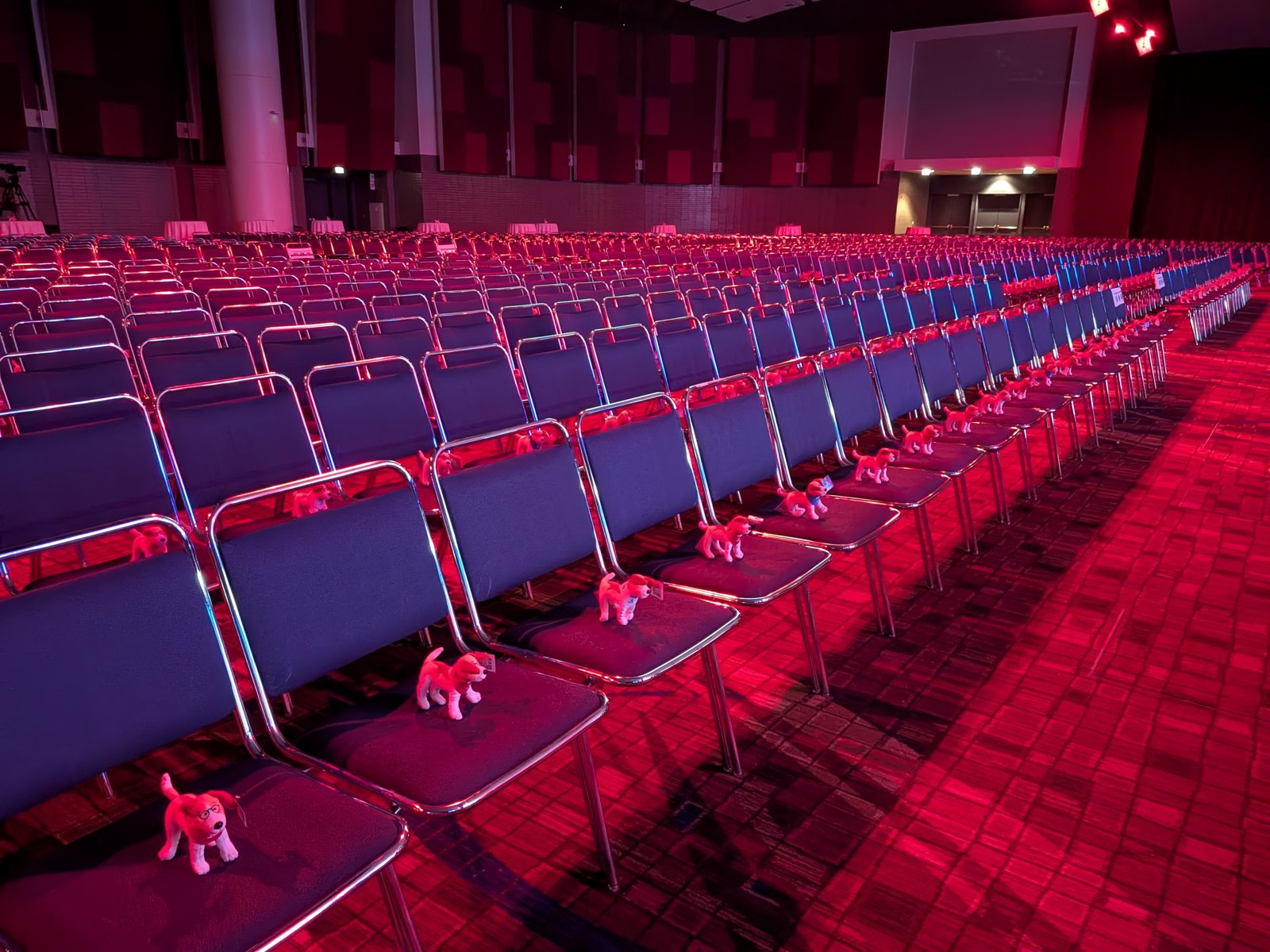
Every choice followed from the distribution. Seat drop meant the plush had to be instantly legible: a friendly dog, no explanation required. The launch context meant it had to match the on-screen character exactly, because the screens, the mascot, and the seats were making one argument together. And the numbers meant ordering to the room, not the registration list, with a reserve held back for NCSL's booth, where a demo of the assistant earned you a dog. The seats did reach; the demos did happen; the dogs went home, many of them to attendees' kids.
Conference swag ideas that earn their place
The character piece
If your brand or product has a face, make it physical. A mascot plush or figure turns an abstract thing, like software, into something people hold, photograph, and hand to their children. It's also self-explaining swag: nobody at the NCSL Summit had to ask what the dog was once Nora was on the screens.
The genuinely useful piece
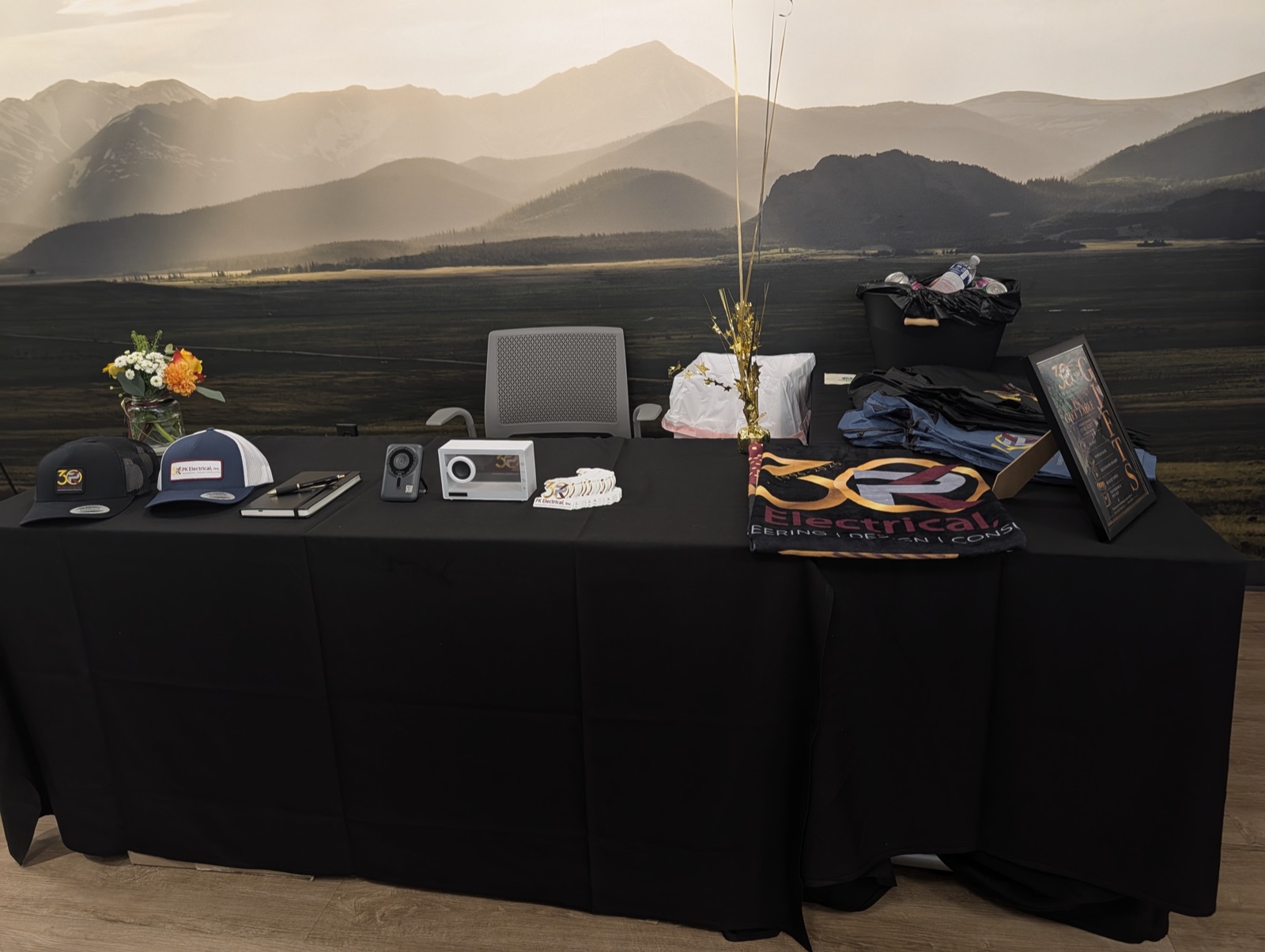
Chargers, quality bottles, real notebooks. The trick is matching the useful thing to the specific crowd. At an electrical engineering firm's celebration, the piece guests talked about without prompting was the charger. The best swag doesn't fight the audience; it agrees with them.
The wearable people would buy
One rule: retail quality or don't. A cap or tee that people would pay for gets worn for years and becomes a walking impression. A thin promo tee becomes pajamas at best. If the budget only covers thin, spend it on a different category.
The piece with a story
Something made locally, made sustainably, or made only for this event gives the recipient a sentence to say when someone asks about it. A frosted slushie cup printed for one slope-side club. Keychains cut from Colorado beetle-kill pine. The story is the value; the object carries it.
What to skip
- Anything that needs explaining. If it takes a sentence to justify, it takes a second to discard.
- Anything that won't fit a carry-on. Conference swag has to fly home. Oversized items get photographed and left behind.
- The reflex items. Pens, stress balls, thin totes, lanyard clutter. Not because they're cheap, but because they're invisible. Fifty booths are handing out the same thing.
- Ordering for volume. Five hundred pieces people keep beat two thousand pieces they don't. Scarcity at the booth is a feature: it gives people a reason to stop now.
How many should you order?
Order to the moment, not the badge count. For a seat drop, count the room: a 3,000-seat ballroom needs roughly one per seat, minus the rows that won't fill. For booth distribution at a large show, a fraction of total attendance is fine, and running out on the last morning is healthier than shipping boxes home. Whatever the math says, hold a reserve. The people who missed the drop and come asking are your warmest audience of the whole event.
On timing: catalog items need two to four weeks. Custom pieces, the kind that carry a launch, need eight to twelve, plus the venue's delivery window, which closes earlier than you think. The brief first conversation has to start when the event is still a calendar invite, not a floor plan.
Common questions
What is conference swag?
Branded merchandise given to attendees at conferences, trade shows, and summits: booth giveaways, seat-drop gifts, speaker gifts, VIP kits. The good kind is chosen for a specific audience and moment. The rest is chosen from a catalog the week before, and it shows.
What is the best conference swag?
The piece that matches your audience and does a job. Items that survive the trip home are genuinely useful or genuinely delightful, fit in a carry-on, and need no explaining. A character plush at a product launch, a well-made charger for a technical crowd, a cap people will buy.
How many items should I order?
For a seat drop, count the room, not the registration list. For a booth, a fraction of attendance is plenty. Always hold a reserve for the people who come looking after the drop; they're the most interested people at the event.
How far in advance should I order?
Two to four weeks for catalog items. Eight to twelve for custom-developed pieces, plus the venue's delivery deadline, which is earlier than the event date. Launches deserve custom, so launches need the long runway.
Is a seat drop better than a booth giveaway?
Different jobs. The seat drop reaches the whole room at one shared moment, which is unbeatable for a launch. The booth giveaway earns a conversation or a demo. The strongest activations do both, with the booth holding the reserve.
Start with the brief
Every idea above came out of the same process: ask what the moment is, who's receiving it, and what should happen when they pick it up, then choose or build the product that answers. That's how a software launch ends up as 2,500 plush dogs on ballroom seats, and how an engineering firm's anniversary ends up as a charger people brag about. It's the whole method, and it's why the same catalog item at fifty booths can't compete.
Planning an event? Tell us the moment you're building and we'll start with the brief, not a catalog. See how this plays out in the field in our NCSL launch recap, or browse the work page.